
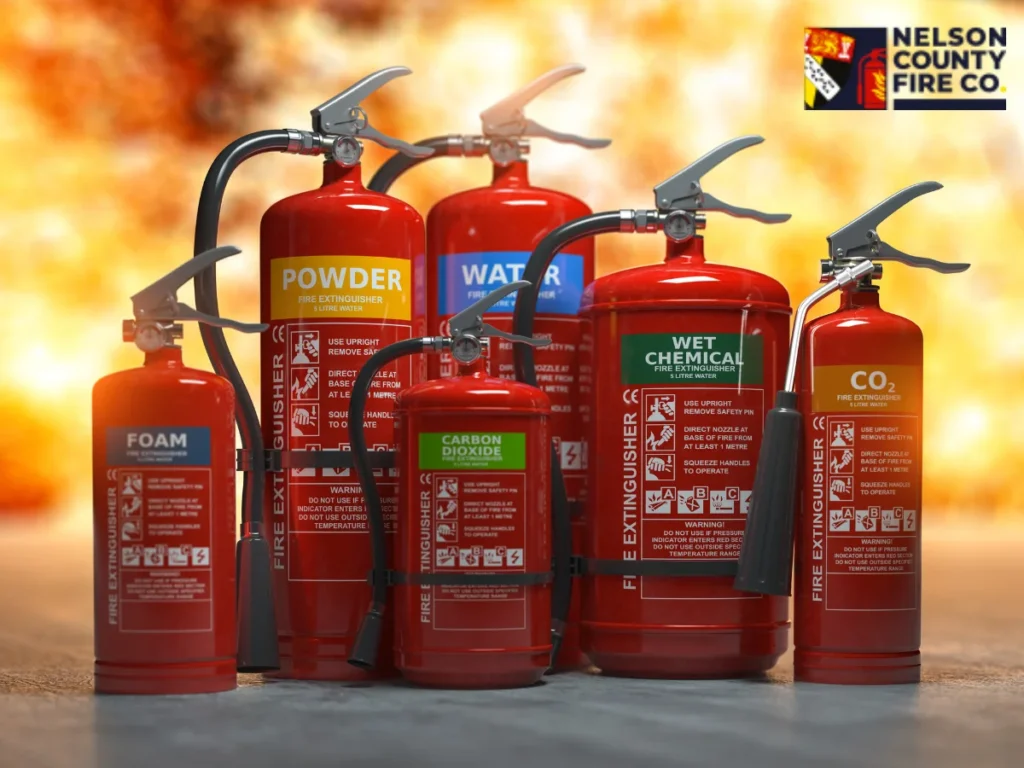
Fire safety in a business setting is a lot more than just having extinguishers on the wall. It is about knowing three things:
- Which one to use
- When to use it
- Why the correct choice can stop a small incident from becoming a major disaster
Many workplace fires grow out of confusion! Not a lack of equipment.
It becomes much easier to protect lives and property when people understand the purpose of each type of extinguisher. Every unit is designed for a specific situation. Picking one that is not suitable may fail to stop the fire and could increase the danger.
Nelson County Fire helps businesses choose the right type and make sure it is kept in the place where it will be most useful.
Why Fire Extinguisher Knowledge Matters in the Workplace
Most fires in commercial buildings start small. An overheated appliance. A faulty wire. A minor spill near a heat source. These all can escalate in no time. Staff need clarity! Hesitation won’t work.
Response time improves & panic is reduced when employees understand fire extinguisher types and uses. People can act safely and decisively instead of standing back without knowing anything! This knowledge also supports legal compliance and strengthens overall fire safety planning.
Businesses that take extinguisher education seriously are often better prepared for inspections and emergencies alike.
Water Fire Extinguishers and Where They Work Best
Water extinguishers are one of the most common fire extinguisher types used in business environments. They are made for fires involving solid materials: Wood. Paper. Cardboard. Textiles.
You will usually see these extinguishers in the places where everyday materials such as paper or wood might catch fire: Offices. Classrooms. Shops. Stock rooms. They work by soaking up the flames and lowering the heat. This helps prevent fire from starting again.
But you know what? They are not right for every situation. Water should never be used on live electrical equipment or burning liquids. Understanding where it is safe to use them is a important part of knowing how different extinguishers work.
Foam Extinguishers for Mixed-Risk Areas
Foam extinguishers are versatile and widely used in commercial premises. They are suitable for solid fire and flammable liquid fires. This makes them best for environments with mixed risks.
Offices with kitchens and warehouses often depend on foam extinguishers because they create a sealing layer that puts a stop to vapours from reigniting. This makes them the best at stopping fires quickly when liquids are involved.
Foam units provide a reasonable balance between safety and usability for many businesses.
CO₂ Extinguishers for Electrical Equipment Fires
Carbon dioxide extinguishers are essential in workplaces with electrical equipment. These extinguishers work by displacing oxygen. This helps smother the fire without leaving residue behind.
These environments often require CO₂ units: Server rooms. Control panels. Offices with heavy IT use. One of the important benefits is that they do not damage sensitive equipment.
Understanding this category within fire extinguisher types and uses helps prevent mistakes that could put people at risk during an electrical fire.
Dry Powder Extinguishers and Their Specific Role
Dry powder extinguishers act quickly and can be used on many kinds of fires. They are suitable for these burning cases: Solids. Liquids. Gases. Some electrical risks.
They are common in factories and other open or industrial areas because they are so versatile. The downside is the thick powder they release. It can make it hard to see! Also, many people find it irritating to breathe inside buildings.
They fight a wide range of fires! But you know what? They are not always the best choice for smaller and enclosed workspaces.
Wet Chemical Extinguishers for Commercial Kitchens
Commercial kitchens face a unique fire risk because of cooking oils and fats. Wet chemical extinguishers are designed specifically for these conditions.
They cool the fire and create a soapy layer that seals the surface. It prevents re-ignition. Restaurants. Cafes. Catering facilities. Food production unites. They depend heavily on these extinguishers.
Wet chemical units are one of the most important types of fire extinguishers for hospitality businesses when discussing fire extinguisher types and uses.
Matching Extinguisher Types to Business Risks
Two workplaces are not the same. The dangers in a quiet office are very different from those in a busy kitchen or a large storage building. Picking extinguishers should always be based on the real risks in that space because of this.
Nelson County Fire works with companies to decide which unit belongs where. Location is just as essential as the equipment. Even the best extinguisher can slow people down if it is not nearby when required.
Companies can place extinguishers in better spots when they know what each of them is made to deal with. This makes it easier for people to move fast and stay safe if a fire breaks out.
Staff Awareness and Safe Use of Fire Extinguishers
Fire equipment works really well when the people nearby know their limits. Moving to safety and calling for help is the smarter choice than trying to fight the fire in many cases.
Employees should be comfortable determining the different units and understanding that they are intended for small and manageable solutions only. Trying to do more can put them at risk.
A clear understanding leads to calmer reactions. Confusion drops & the chance of anyone getting hurt becomes much lower when people know what is expected.
Common Mistakes Businesses Make with Fire Extinguishers
Fire equipment can give a wrong sense of security. Some workplaces grab whatever type is available and assume it will handle any emergency. Others fix units to the wall and never review whether they still match the dangers in that area. It is generally in case of if rooms are updated or work patterns change.
Another issue is neglect. An extinguisher that is not looked after cannot be trusted! No matter how good it once was.
Businesses can avoid poor choices and create a safer environment for everyone by learning how different extinguishers are meant to be used.
How Nelson County Fire Supports Local Businesses
Nelson County Fire works in close collaboration with businesses to evaluate risks and ensure proper installation. Their approach focuses on practicality and compliance.
Businesses receive advice customized to their environment instead of generic solutions. This helps guarantee that extinguishers are effective and legally compliant.
Continuous support also includes: Servicing. Inspections. Guidance on staff awareness.
Fire Extinguisher Types and Uses as Part of Fire Safety Planning
Fire extinguishers should never be treated as standalone equipment. They are part of a wider fire safety strategy that includes:
- Alarms
- Signage
- Evacuation plans
- Staff training
They strengthen their entire safety framework when businesses understand fire extinguisher types and uses. This preparation protects lives and supports business continuity.
Final Thoughts for Business Owners
Fire risks cannot be removed completely. But you know what? They can be controlled. Knowing which extinguisher to use and where it belongs makes a real difference during an emergency.
Businesses take an important step toward safety and compliance by learning about fire extinguisher types and uses. This process becomes clear and effective with expert guidance from Nelson County Fire.